
GEPT and GEPT Kids
2026.02.06
LTTC Collaborates with NTU, NTNU, and NTHU to Develop Effective AI Scoring Models for GEPT
To stay aligned with current trends in international language assessment research, and with the support of a grant from the National Development Council, the LTTC carried out the research project Applying Artificial Intelligence to the Development of Automated Scoring for English Speaking and Writing Assessment from 2023 to 2025. The project was conducted in collaboration with Professor Zhao Ming Gao of the Department of Foreign Languages and Literatures at National Taiwan University (NTU), Professor Berlin Chen of the Department of Computer Science and Information Engineering at National Taiwan Normal University (NTNU), and Professor Jason S. Chang of the Department of Computer Science at National Tsing Hua University (NTHU). Its primary goal was to develop AI-based automated scoring models for the speaking and writing tests of the GEPT, which have been implemented in the GEPT iPrep platform.
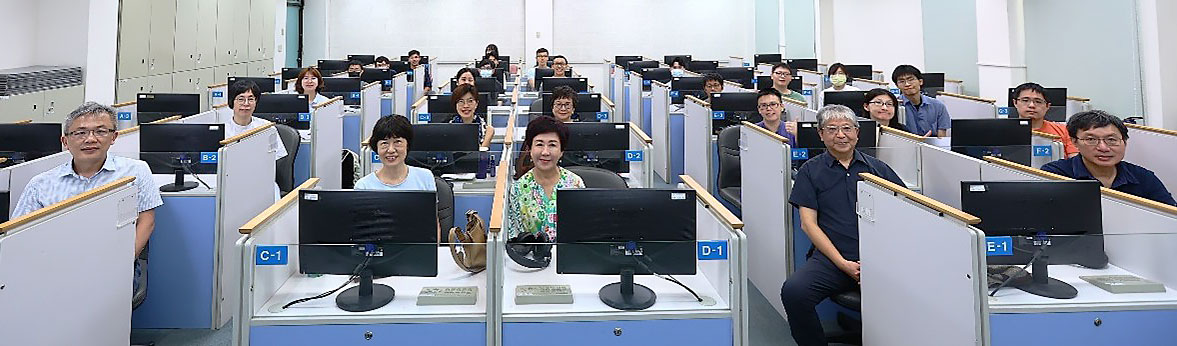
▲ LTTC and partner university teams (front row, from left to right):
Prof. Berlin Chen, Department of Computer Science and Information Engineering, NTNU;
Prof. Hsin-Ying Li, LTTC Chief Executive Officer;
Dr. Jessica Row-whei Wu, LTTC Deputy Chief Executive Officer;
Prof. Jason S. Chang, Department of Computer Science, NTHU;
Prof. Zhao Ming Gao, Department of Foreign Languages and Literatures, NTU.
Over the course of the project, the LTTC team convened regular meetings with the research teams of NTU, NTNU, and NTHU to communicate thoroughly on scoring criteria and to review differences between human ratings and AI scoring results. The teams analyzed the causes of these discrepancies and discussed solutions, while also addressing software and hardware issues arising during system development to ensure high reliability and validity of the AI scoring outcomes. Through joint efforts, AI scoring models for 13 task types in the GEPT speaking and writing tests have been completed. Several models—including those for speaking tasks such as Picture Description and Answering Questions, and writing tasks such as Chinese-English Translation and Guided Writing—have been applied to the GEPT iPrep platform to assist test takers in efficiently preparing for the GEPT or performing self-assessment in their daily practice.
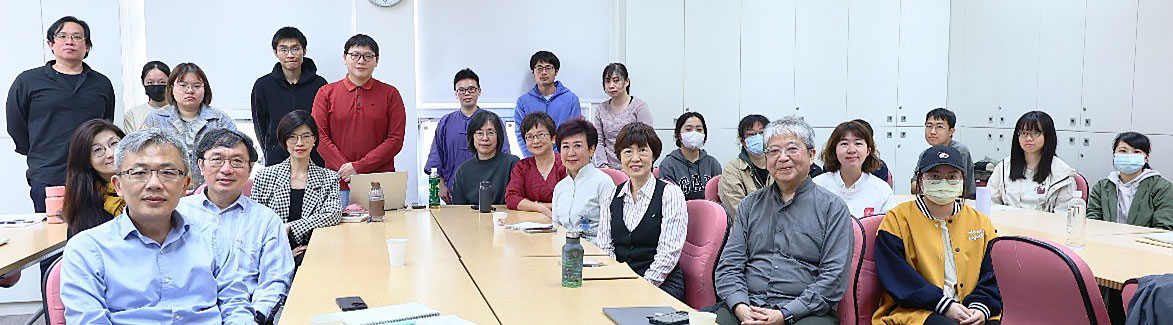
▲ LTTC meets with the teams from the three partner universities.
The AI scoring models developed under this project have demonstrated a high level of accuracy. For example, the agreement rate between AI scoring and human ratings for the High-Intermediate task, Answering Questions, reached 80%. In addition, the AI model can provide specific and constructive feedback to help test takers identify key areas for improvement, thereby enhancing learning effectiveness and confidence in test performance. For instance, the speaking model for Answering Questions offers suggestions from the two major dimensions of content and language, while the model for the writing task, Chinese-English Translation, provides feedback on aspects such as semantic relevance, vocabulary, and grammar.
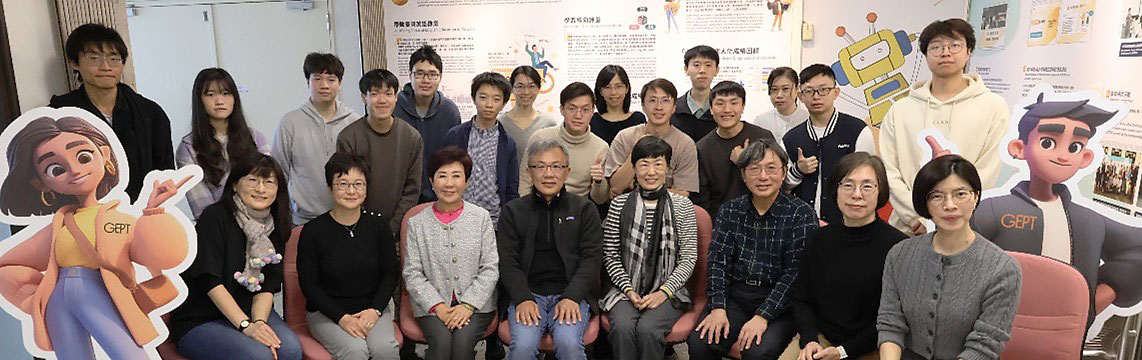
▲ Group photo of LTTC staff and the lead professors at the project's closing meeting
The LTTC expresses its sincere gratitude to the research teams from NTU, NTNU, and NTHU for their dedicated efforts in collaborating with us to create a professional, high-quality, and up-to-date language assessment service.
▲ GEPT iPrep: https://prep.gept.org.tw